ABOUT BEANSPARADE
Small-batch roasting since 2018
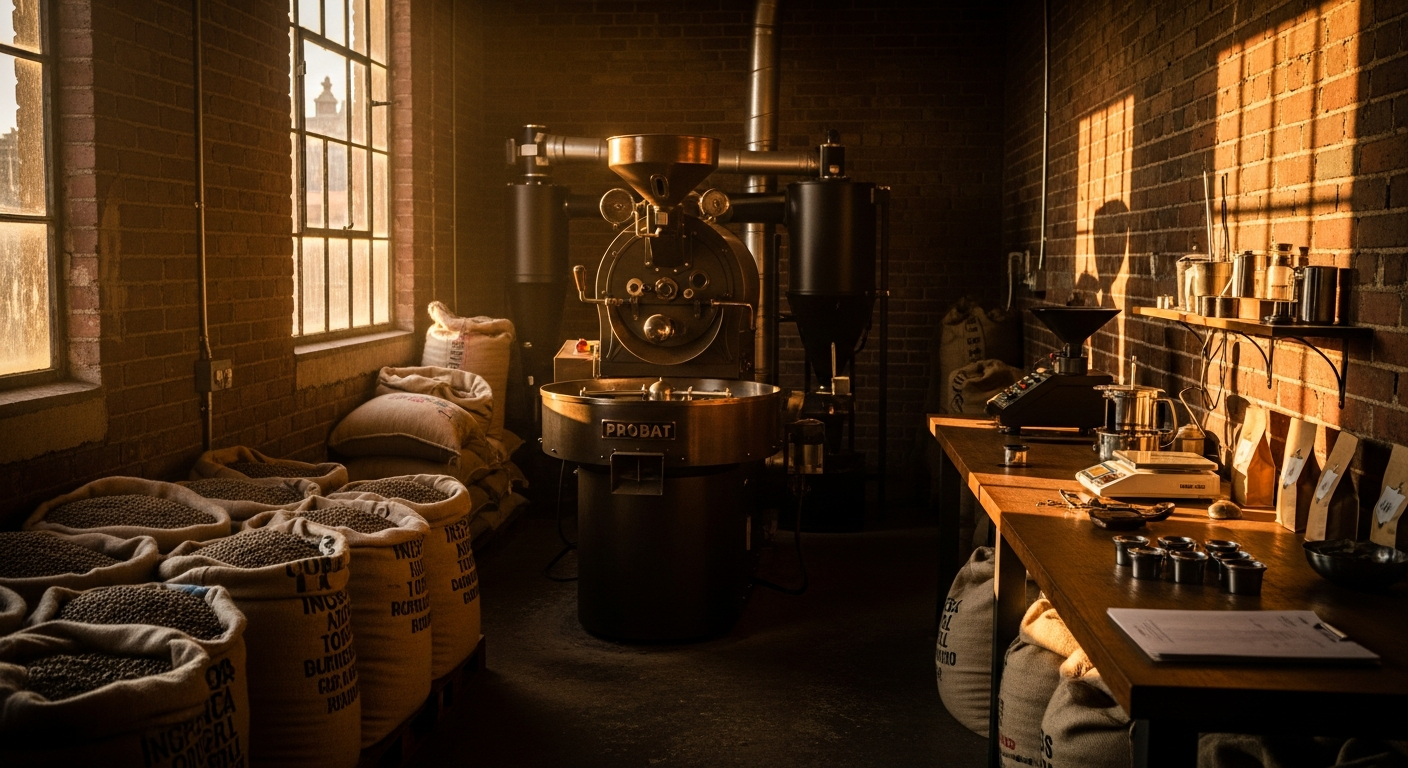
BeansParade began the way most honest things begin — with obsession. In the spring of 2018, in a converted garage on Portland’s east side, two former baristas started roasting green coffee on a cast-iron skillet. The batches were tiny, often uneven, and occasionally catastrophic. But a handful were transcendent — floral Ethiopian Yirgacheffes that tasted like jasmine tea, dense Guatemalan lots that revealed layers of dark fruit and cacao over days of resting.
The name came from a late-night conversation about what specialty coffee really is: not a commodity, not a lifestyle brand, but a procession of singular lots — each with its own altitude, its own varietal, its own farmer, its own harvest window. A parade of beans. Each one unrepeatable. The name stuck because it described the philosophy before we had the language for it.
By 2019 we had outgrown the garage, acquired a 12-kilo Probat UG-22, and moved into the brick-and-timber building on Roastery Lane that we still call home. The drum is the heartbeat of the operation — everything we roast passes through it in batches small enough that we can taste each one before it ships. We roast four days a week, rest the beans for forty-eight hours minimum, and ship within seventy-two. Nothing sits on a shelf. Nothing is blended to mask inconsistency.
SOURCING PHILOSOPHY
From soil to cup, fully traceable
We buy coffee the way we think it should be bought: directly from farmers or through importers whose supply chains we can verify down to the lot, the washing station, and the harvest date. Every bag we sell carries its full provenance — not as marketing, but as accountability. If we can’t tell you where a coffee came from, how it was processed, and who grew it, we don’t roast it.
Our relationships are long-term. We’ve worked with the same families in Huila, Colombia, for four consecutive harvests. We return to Guji, Ethiopia, each season because the washed lots from the Shakiso cooperative consistently produce the clarity and florality that define our house profile. In Guatemala, we partner with Finca El Injerto — a fourth-generation farm whose anaerobic-washed experiments push processing science forward without sacrificing terroir.
Traceability isn’t a badge we pin on after the fact. It’s the architecture of the entire operation. We publish FOB prices on every lot page so customers know what we paid. We share cupping scores, altitude ranges, varietal breakdowns, and processing timelines — not because the average buyer needs all of it, but because hiding any of it would make the rest meaningless.
OUR VALUES
01 — Transparency
02 — Small Scale
03 — Seasonality
04 — Community
Transparency means publishing what we pay, how we roast, and why we chose a specific lot. We share cupping notes, FOB prices, and processing details on every product page — not because every customer reads them, but because omitting them would compromise the integrity of everything else we say.
Small scale is not a limitation — it’s the method. Our 12-kilo Probat processes each lot individually. We taste every batch before it leaves the roastery. When a lot sells out, it’s gone. We don’t blend substitutes to fill the gap.
Seasonality guides our offering. Coffee is an agricultural product with harvest windows, not a year-round commodity. Our menu rotates with the harvest calendar — East African lots arrive in spring, Central Americans in late winter, Colombians twice a year. When a coffee is at peak freshness, we feature it. When it fades, we retire it.
Community is the reason we host monthly tasting events and keep the roastery doors open on Saturdays. Coffee is better when it’s shared. Our tasting table seats twelve — enough for conversation, small enough for everyone to taste the same cup and disagree about what they find in it.
STAY INFORMED
Sourcing updates and new arrivals
We send one email per month — new lot arrivals, origin stories from the field, and early access to limited allocations. No noise, no promotions. Just coffee.